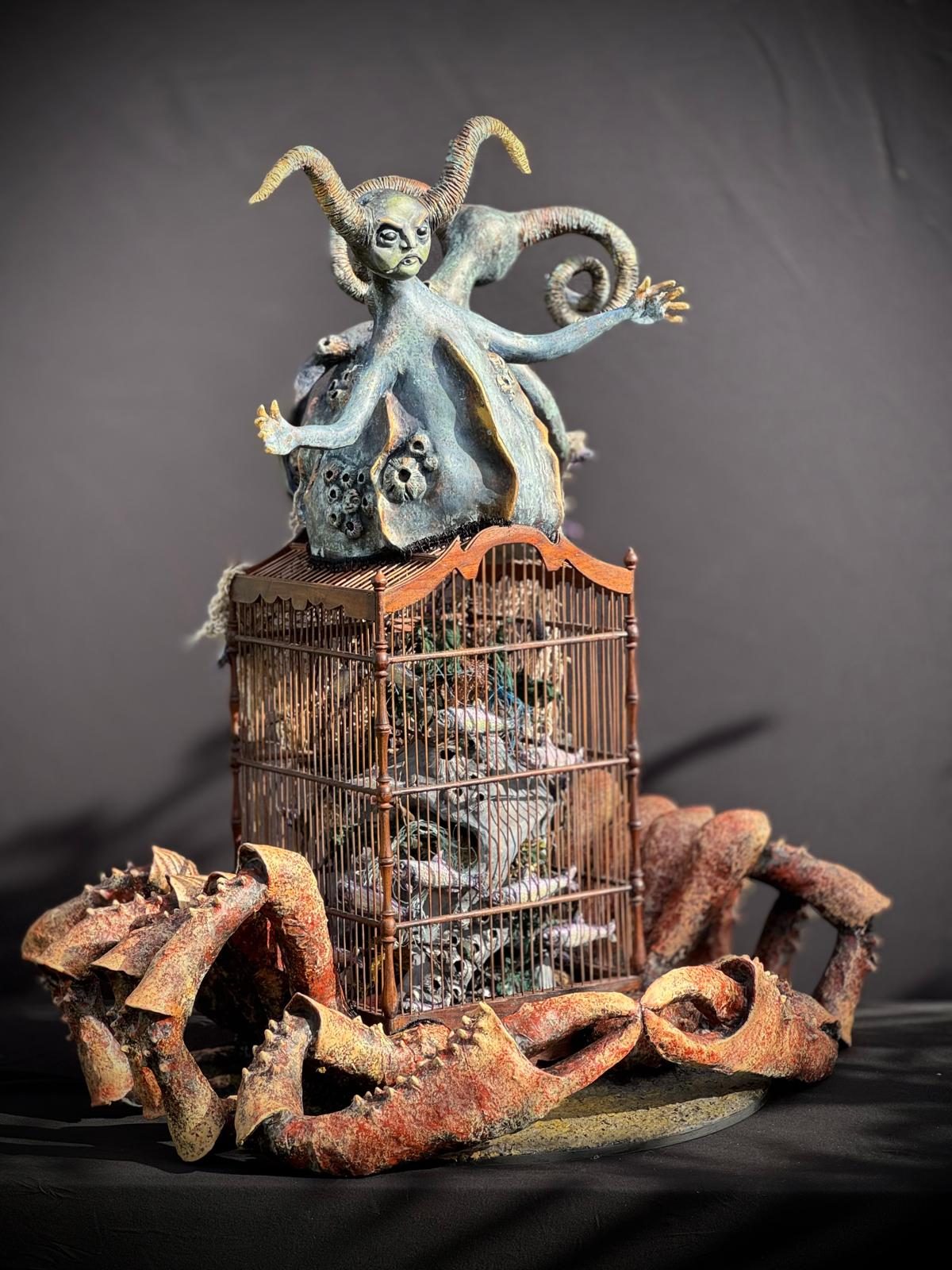
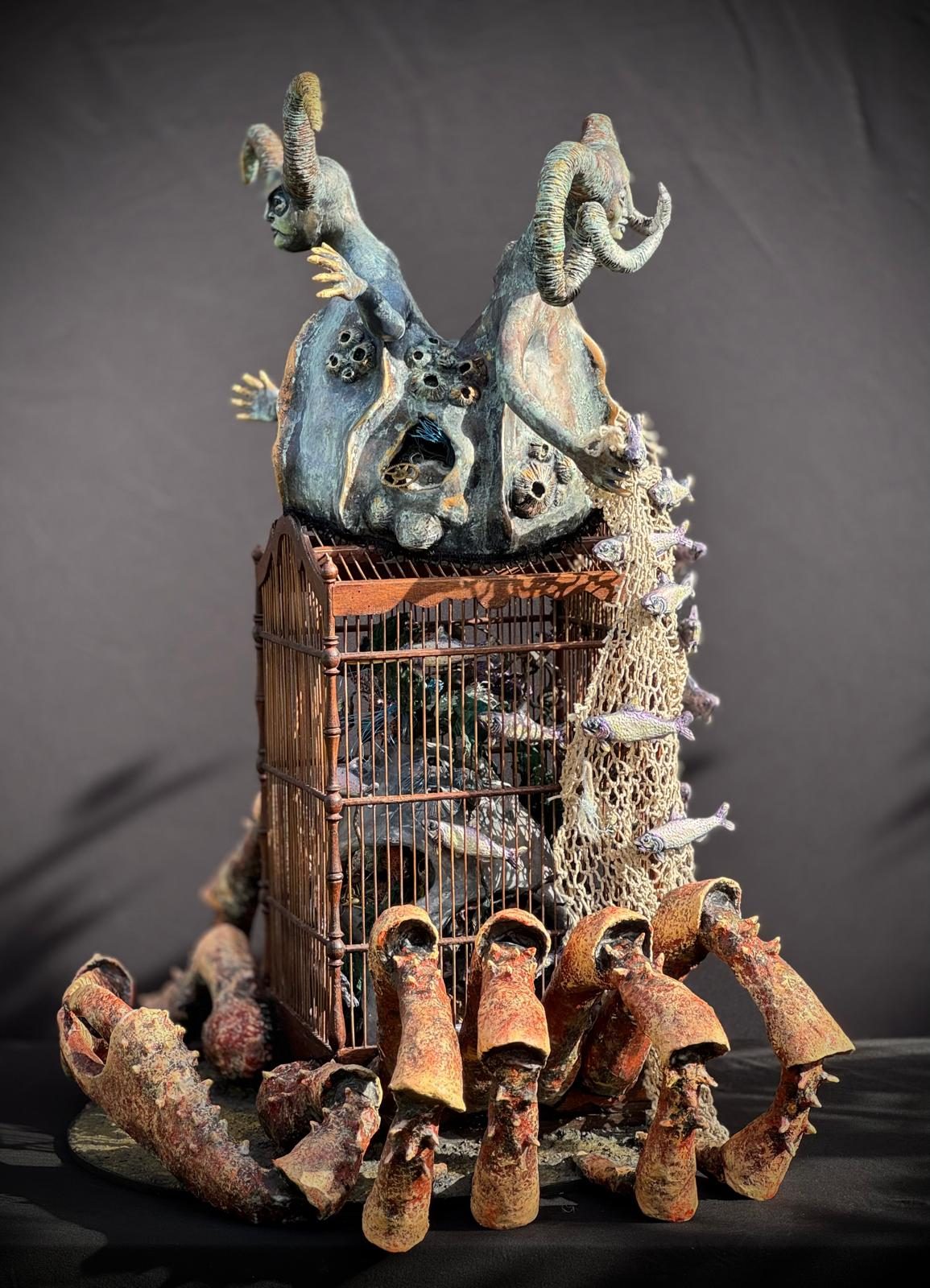
Commissioned by Dark Cornwall and the National Trust for the annual Kalan Gwan exhibition at Trelissick House and Gardens in Cornwall, Bucca Dhu and Bucca Widn are two aspects of an ancient Cornish sea spirit. I was initially commissioned to create Bucca Dhu, the dark and malevolent aspect of the Bucca, but I felt I couldn’t possibly make one without its counterpart. Bucca Widn is the benevolent spirit, associated with good fishing and fair weather. Together, they embody opposing forces that exist in nature and in all of us. I believe it is vital to seek balance, particularly in a world that can often feel so out of balance. In times gone by, fishermen would leave offerings to appease the Bucca and bring good luck at sea. I love a sea spirit, and this particular deity has everything for me: folklore, mystery, the power of the natural world and the tension between darkness and light.
Rather than creating two separate sculptures, I made the Bucca as one whole, with both aspects growing from an antique birdcage and facing in opposite directions. At the base, Cornish king crab legs form the body, with their pincers flanking Bucca Dhu. The cage door opens on Bucca Widn’s side, revealing another world within: the Bucca’s cave, filled with treasures, offerings and curiosities. Among these are antiques I discovered on trips to Cornwall to visit my paternal uncle, alongside the found objects and fragments I regularly collect during beach cleans.
These discarded objects carry a message of their own. Once, people left offerings on the shore to honour the Bucca. Today, we often leave behind our rubbish and plastic instead, offerings that do not please the sea, or the Bucca.
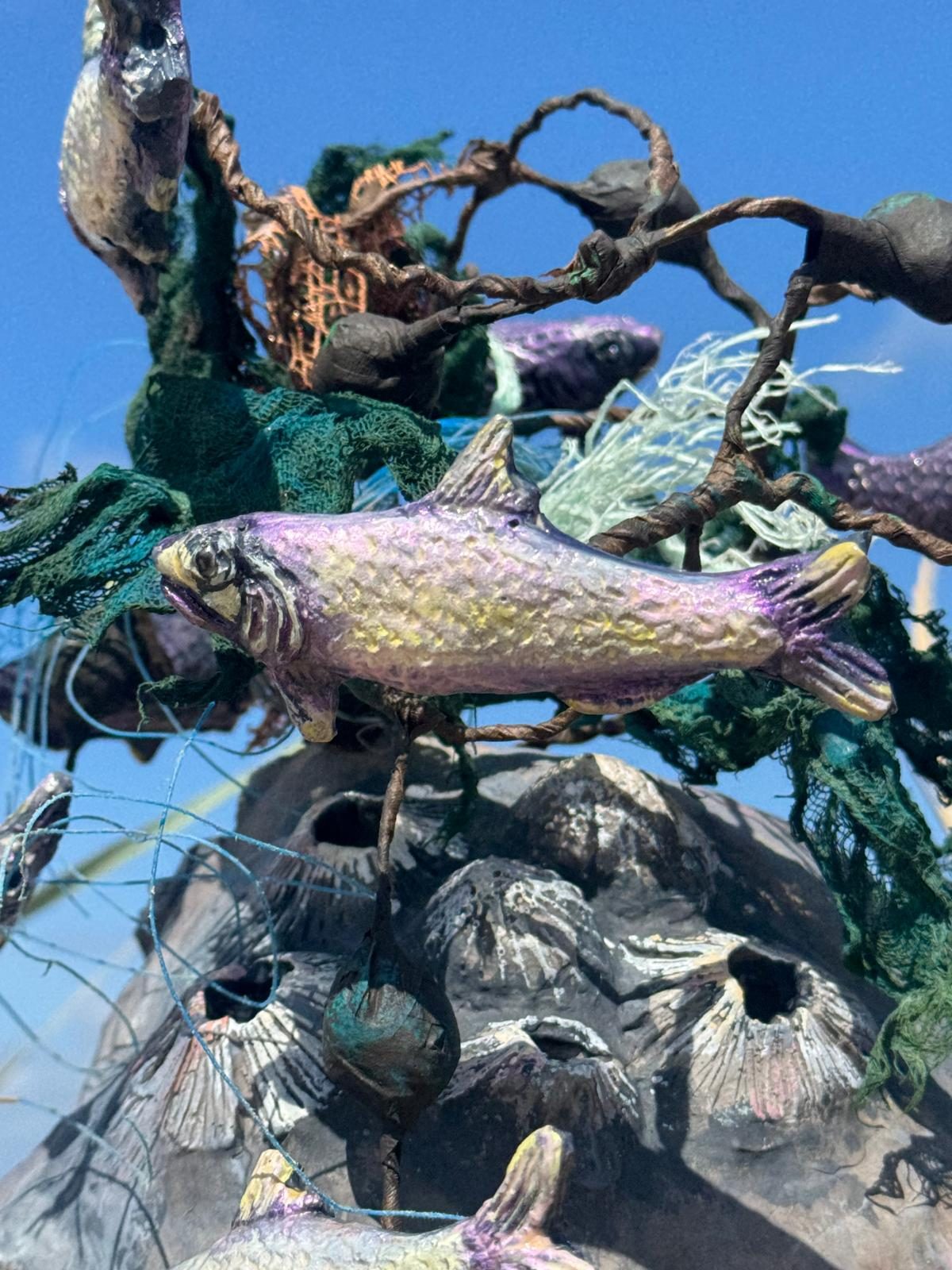
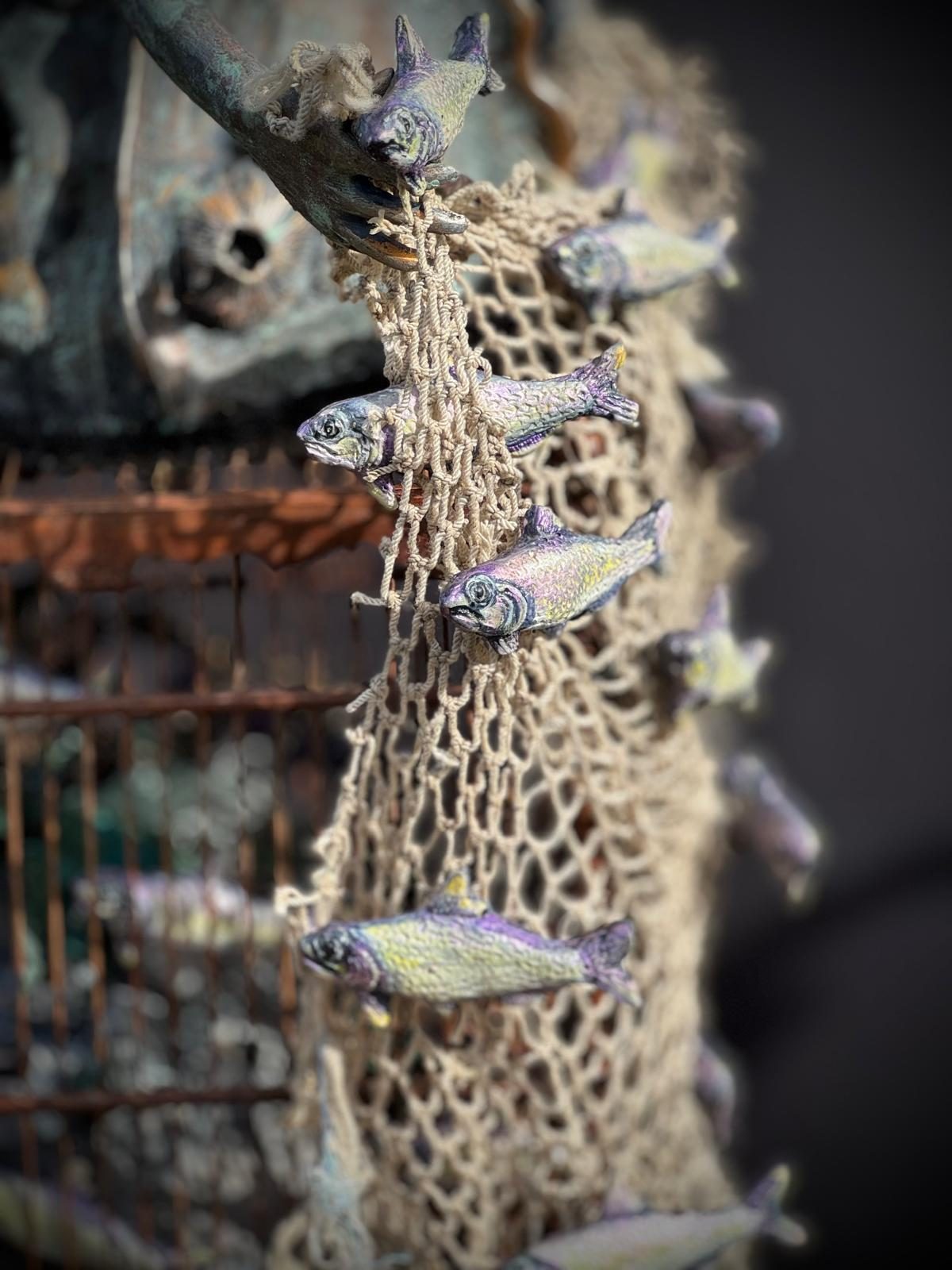
Inside the cave, smaller faces emerge among the barnacles, perhaps the ghosts of forgotten sea spirits. A shoal of more than thirty handmade Cornish sardines swims around the cave, with some escaping through the opening and becoming caught in the net held by Bucca Widn. There are details to discover from every angle, inviting the viewer to pause, look closer and find something unexpected.
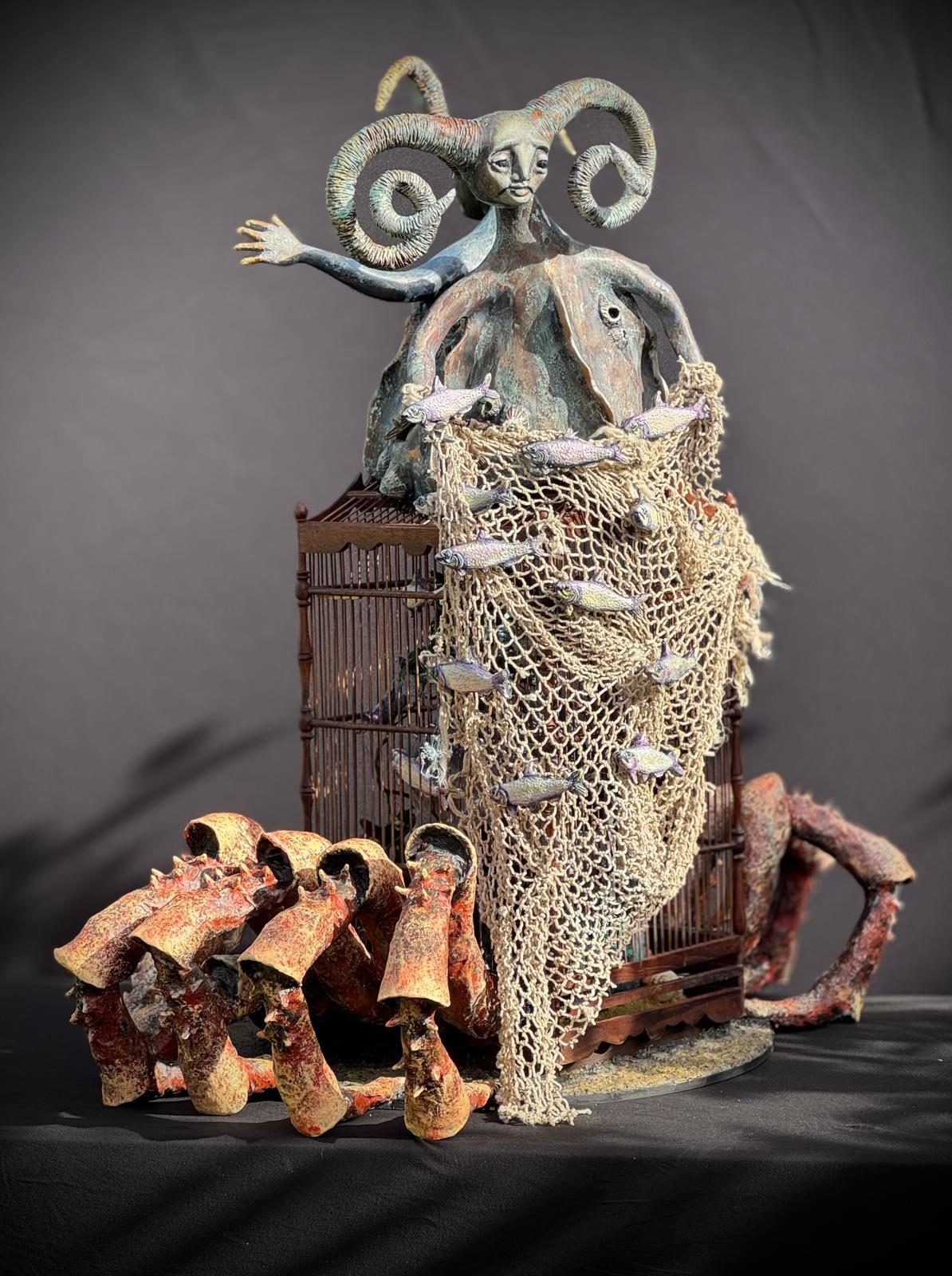
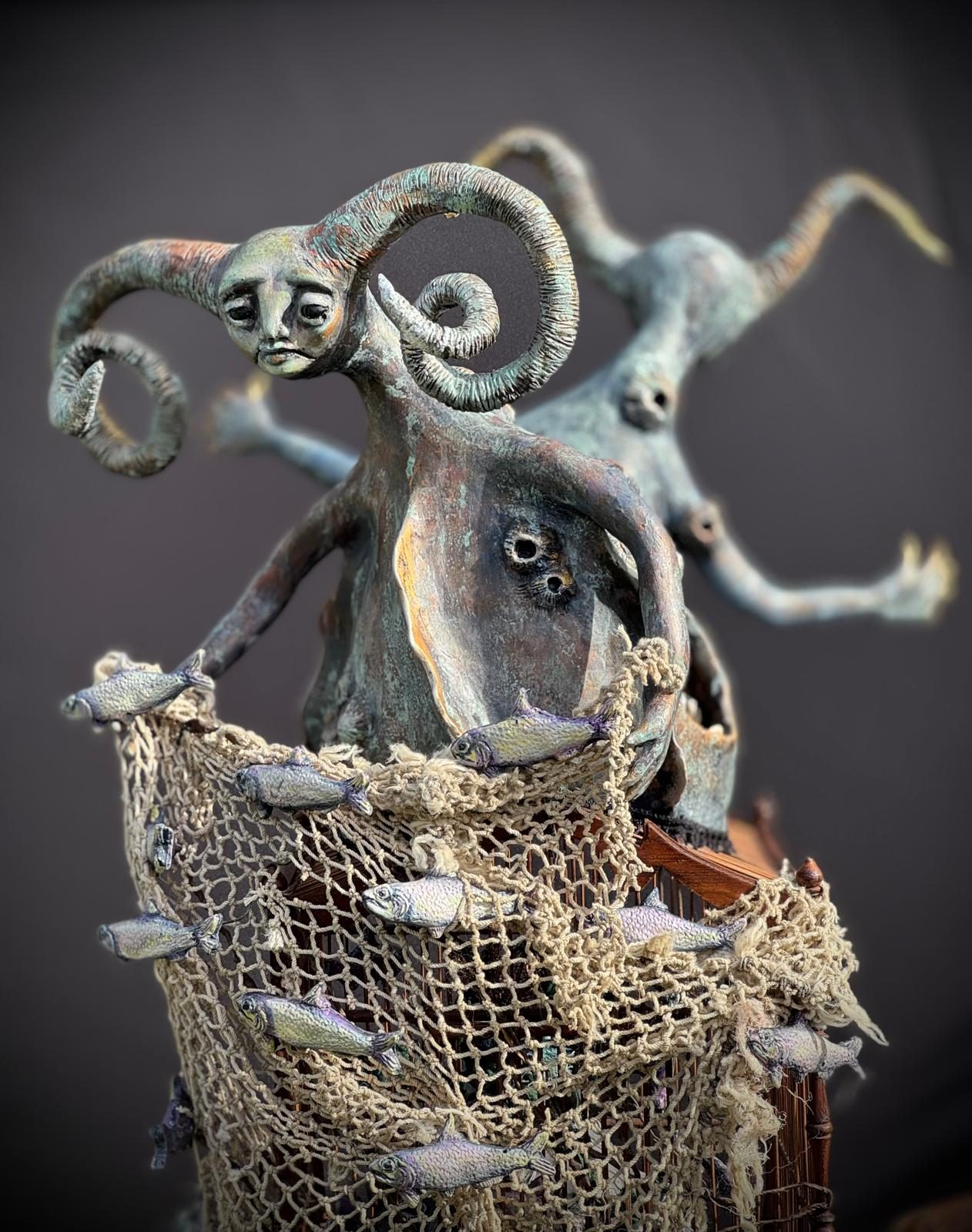
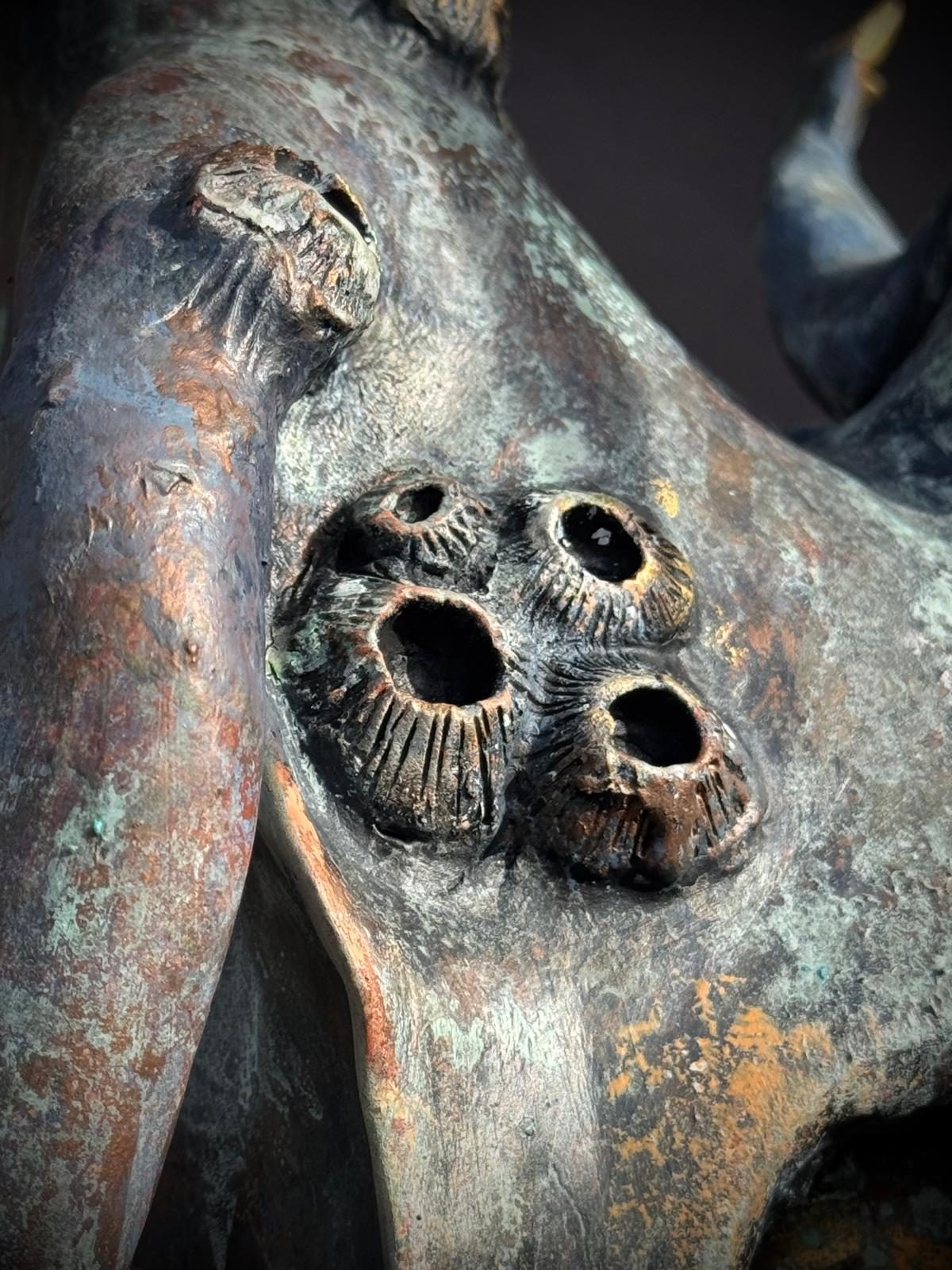
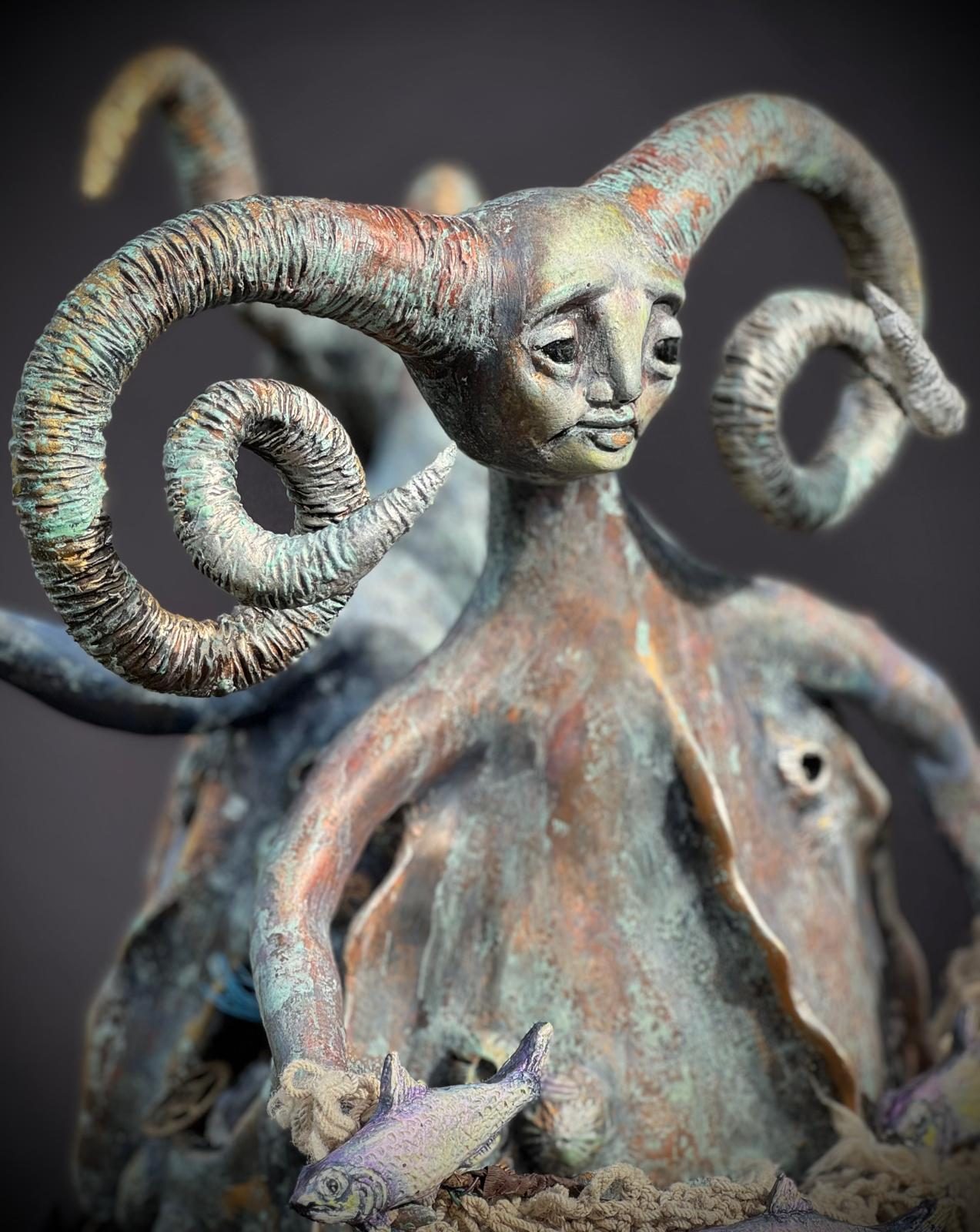
We live in a world of fast-moving screens and ever-increasing pace. I was encouraged to consider the long look with this work: to create something that rewards time, curiosity and repeated viewing. The two horned figures rise from the cage, their bodies finished with areas of metal and patina that create intricate patterns across their skin. One appears welcoming and benevolent; the other angry, watchful and protective.
The making of this work also brought an unexpected personal connection. My paternal grandparents were both orphans, and very little was known about their family history. They raised my father and his brothers in London, and I only recently discovered that my father’s family were originally from Cornwall. Coincidentally, his last surviving brother now lives there.
Born and raised in the North West, I found myself immersed in a body of folklore I had never encountered before, yet which felt strangely familiar. Creating the Bucca has been an opportunity to explore this connection through myth, material and imagination, and to consider the delicate balance between humanity, the sea and the stories we leave behind.